
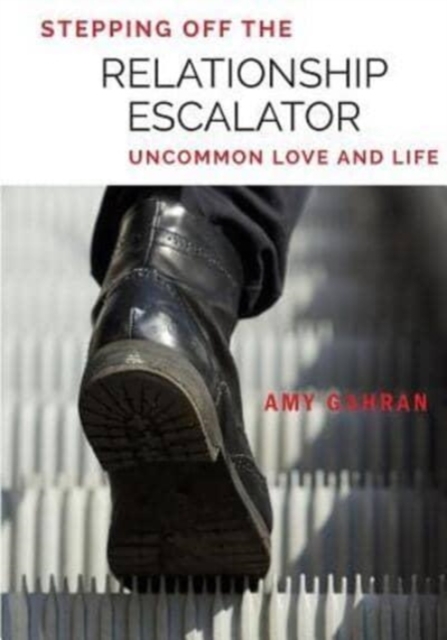
Published in 2017 after four years of research, it explores the bundle of popular customs (monogamy, living together and more) that tend to define assumptions about how intimate relationships “should” work. Then, it shows how many relationships step off that traditional Relationship Escalator by diverging from one or more of these customs.
This book features the experiences and perspectives of over 1500 people who completed an in-depth survey on unconventional relationships, conducted 2013-14 by journalist Amy Gahran. One-third of the content of this book is direct quotes from these surveys, such as:
Charlie: “I am still in an extremely intense, and even more loving and genuine, open relationship with the same person who I partnered with 42 years ago. It isn’t slowing down”
Indigo: “If I tried to fit the relationships I have into norms, they would break. As is, it’s a fantastic buffet where I can choose what works for me.”
Karen: “I wish there was more understanding that all ties don’t have to be cut if a relationship changes. It is normal for relationships to change form, not a sign of failure.”
Unconventional relationships can take many forms. The ones addressed in this book include:
- Consensual nonmonogamy. Polyamory, swinging, don’t-ask-don’t-tell relationships and more.
- High-autonomy relationships, Partners who don’t live together, or who otherwise limit the kind of merging traditionally associated with couplehood.
- Egalitarian relationships. Where no adult relationship “comes first” by default.
- Asexuality and aromanticism. Sex and romance are not the only ways that people form loving, intimate, significant bonds.
- Not always and forever. Many important relationships shift form, pause and play, or were never intended to last a lifetime.
Stepping Off the Relationship Escalator offers an unparalleled first-hand glimpse into unconventional relationships: their issues, advantages and pitfalls. It’s useful for anyone who wishes to think more deeply about relationships, including people who prefer more traditional relationships. It does not assume that different ways of loving are better or worse. Rather, it supports informed choices about relationships. As one participant noted:
“Most people who have unconventional relationships are not claiming that traditional relationships lack value. I think they’re just advocating choice. They’re advocating close examination of relationship traditions to see which ones resonate. They’re brave enough consider a particular tradition and say, ‘You know what? I’m gonna pass on that one.’”

Reviews
There are no reviews yet.